Technique
Time-lapse over the seasons
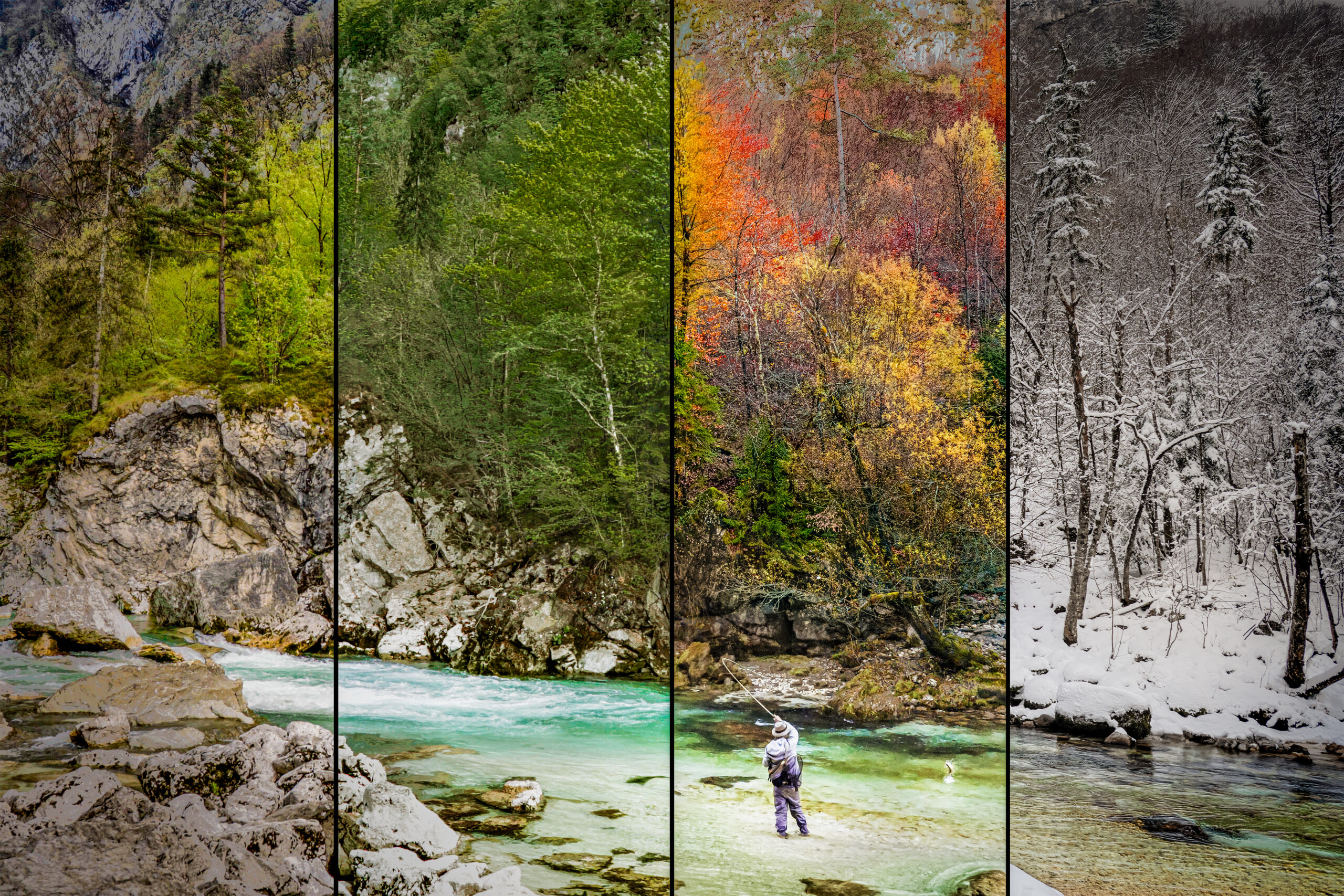
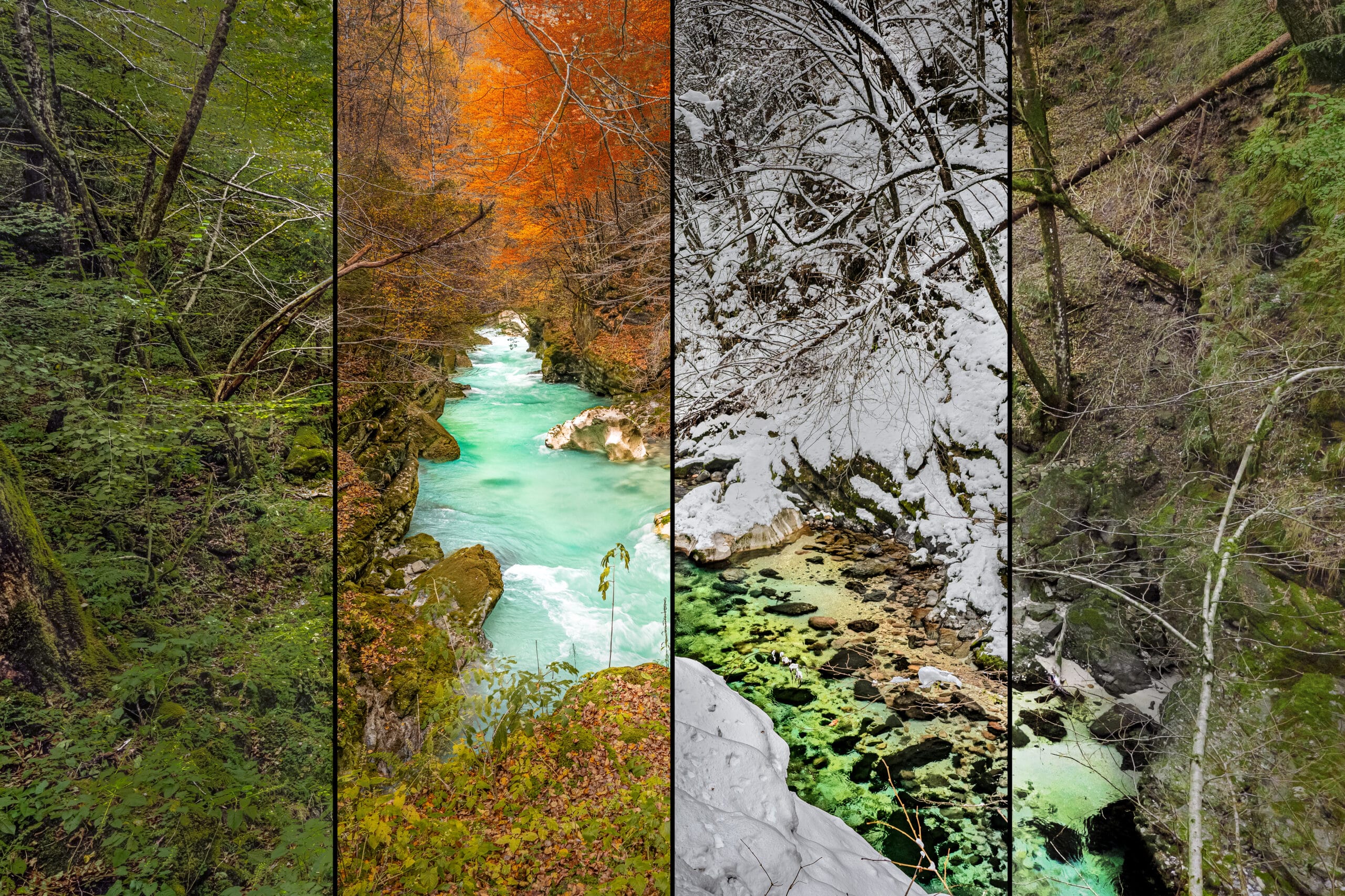
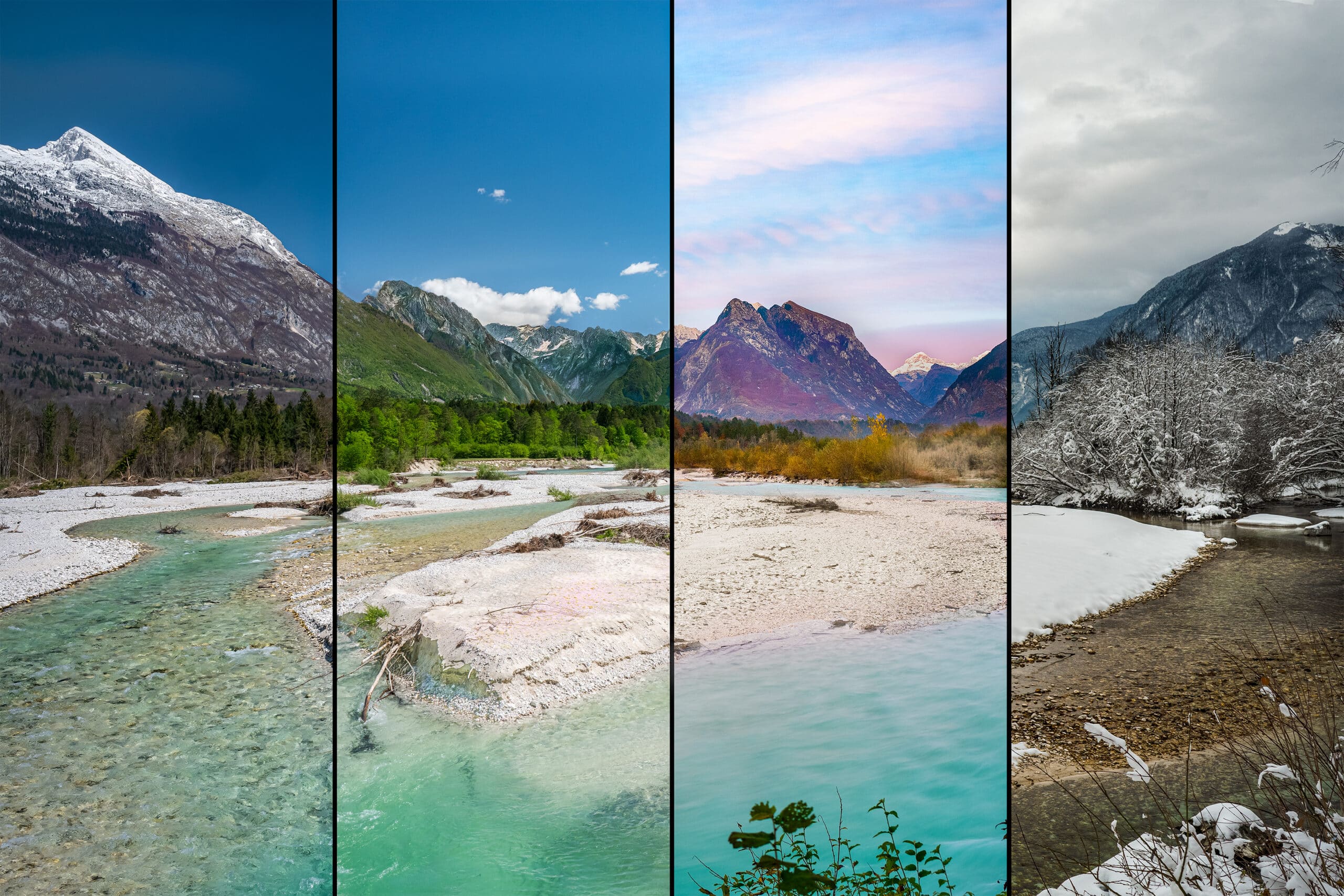
A three-year exercise in patience: identical framings, revisited again and again, waiting for the perfect light.
When the Emerald Paradise project began, I had very little experience with cameras. Among my friends were a photographer, a drone pilot and a cameraman — they inspired me and I learned a lot. To contribute I started doing time-lapse photography: predicting change, choosing a perspective, turning still images into moving pictures.
The idea for improvement came from a simple BBC cross-fade between two shots. I wanted to do many shots and fade them one after another. Simple in theory — extremely difficult in practice. Light varies constantly and creates flicker, so I only recorded when light and visibility matched a reference. We built a custom tripod fixed with screws and alignment pins into threads set into the ground, so the camera could be replaced identically months later.
For rivers we captured video rather than stills — flowing water doesn't interpolate well. The biggest challenge was mood: catching each season at its best across nine hard-to-reach locations. Floods, storms and years without snow drove us to despair. Once, a five-meter boulder we'd anchored around was submerged and swept away by flash flood.
Even with perfect positioning, post-production and overlapping the layers took weeks. The time-lapse work took longer than everything else combined.